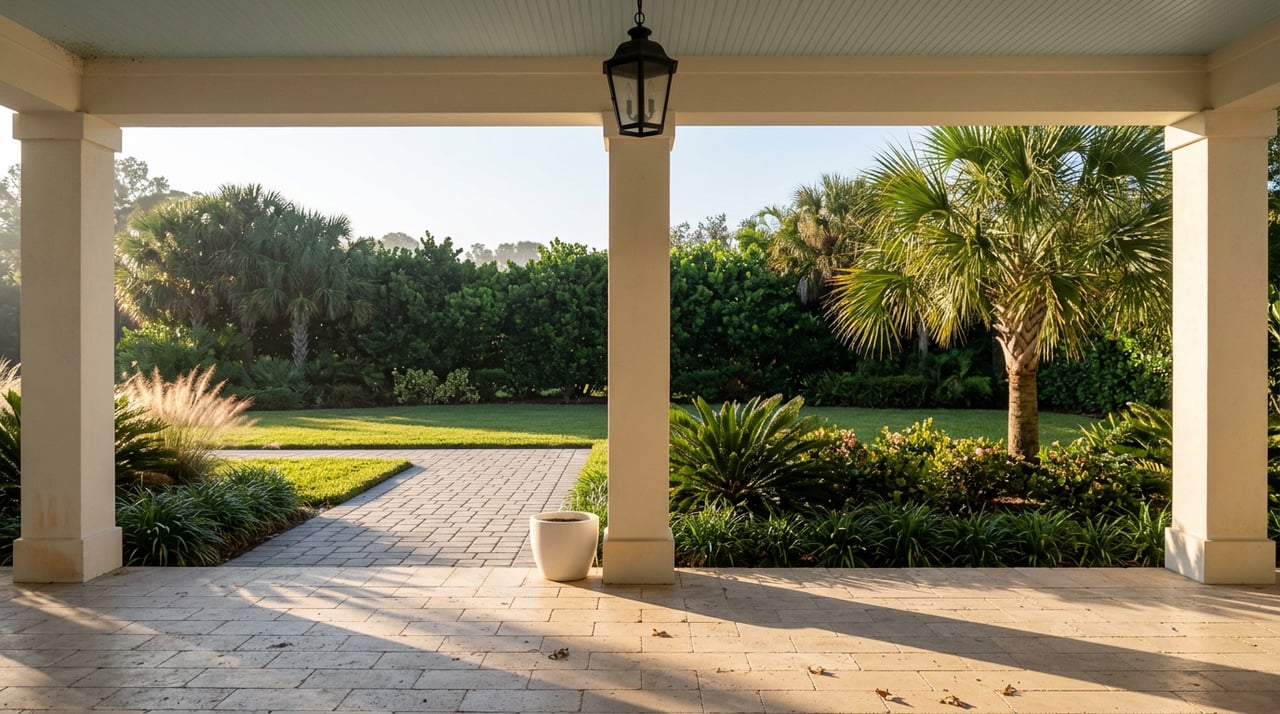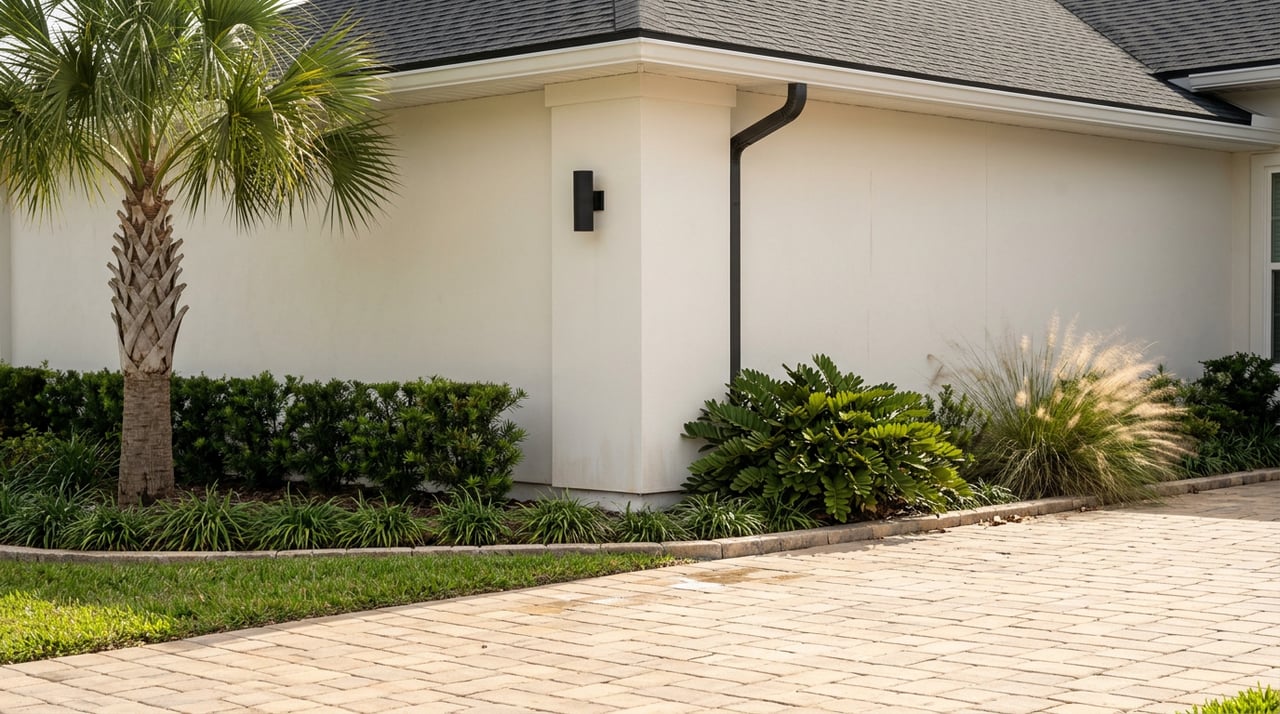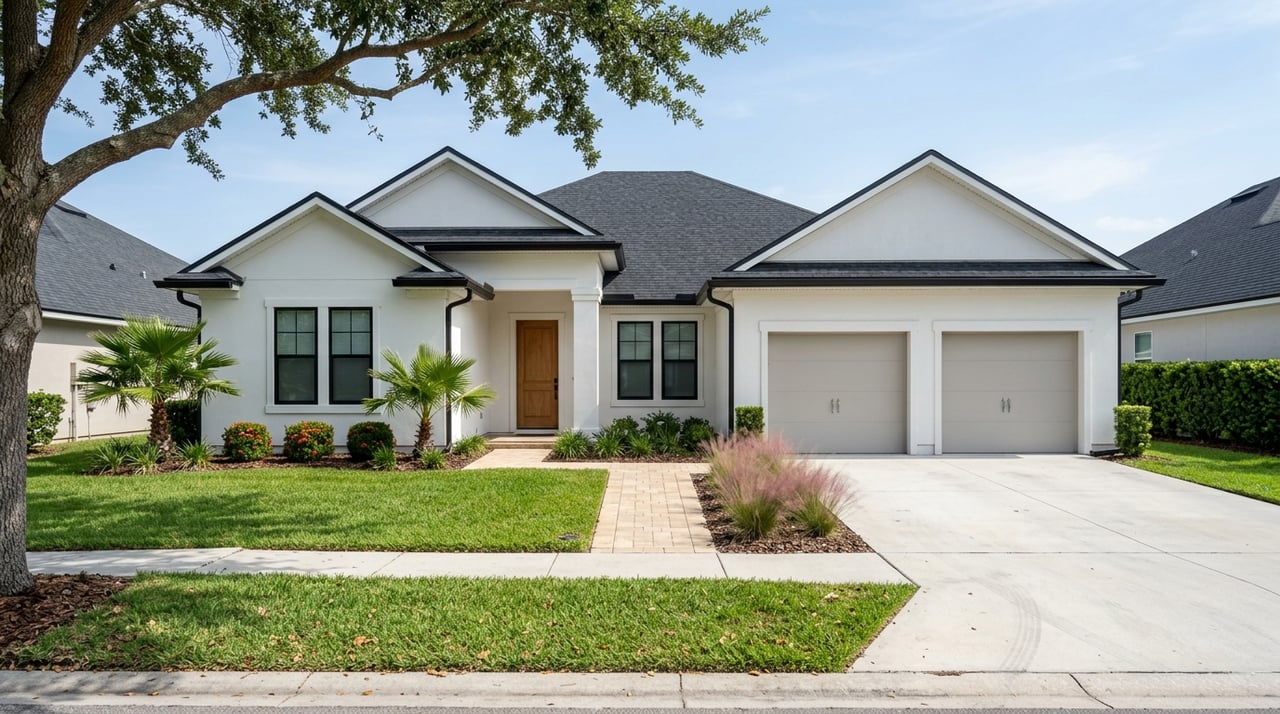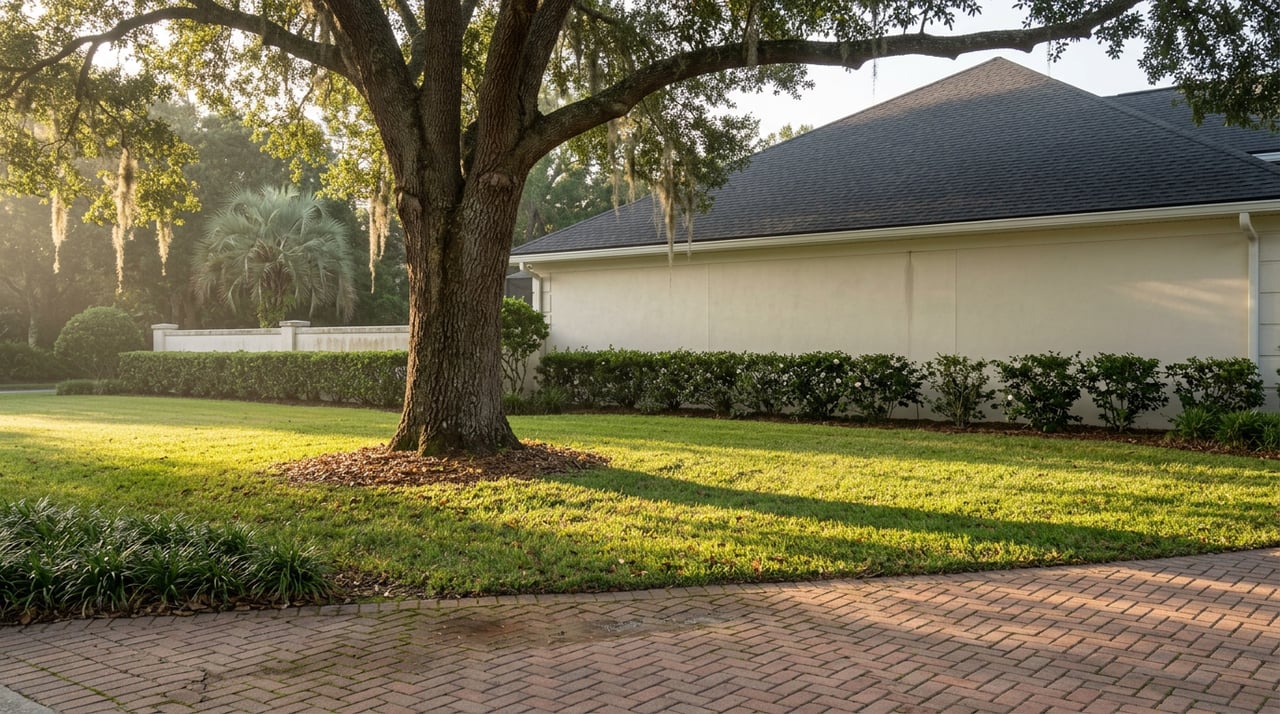
In September 2025, a work crew demolished a 6,923-square-foot home on the corner of Lake Hollingsworth Drive and Jonila Avenue. The house had stood since 1956. By February 2026, the property was in front of Lakeland's Zoning Board of Adjustments and Appeals, with the owner asking for an increased front yard setback of 134 feet 10 inches to accommodate a new single-family home, permission to keep a second driveway on Lake Hollingsworth Drive, and approval to build an accessory dwelling unit in the rear yard. The lot itself runs 220.62 feet by 457.97 feet, well beyond the 150-foot lot width and 22,500-square-foot lot area the district's standard zoning otherwise allows for a single build.
Nobody tore down a perfectly good house on a lake-adjacent street because they disliked the floor plan. They did it because the land under that house had become worth more than the structure sitting on it, and building something new on an oversized historic lot pencils out even when it means asking the city for multiple zoning variances.
That's the piece of the Lake Hollingsworth story that a median price on a listing site won't tell you. If you're comparing this neighborhood to the rest of Lakeland right now, the number you should be asking about isn't the price. It's what the price is actually attached to.
The List Price and the Sold Price Are Telling Two Different Stories
Here's where the numbers get interesting. As of June 2026, homes listed for sale in Lake Hollingsworth carried a median asking price of roughly $537,000 to $540,000, with per-square-foot pricing between $255 and $258. Compare that to Lakeland citywide, where multiple sources put the 2026 median sale price somewhere between $300,000 and $330,000, with per-square-foot costs closer to $189 to $194.
That's a gap of roughly 65 to 70 percent on price and about 35 percent on a per-square-foot basis. On its own, that reads like a straightforward lake-view surcharge.
But look at what actually closed over the trailing twelve months instead of what's currently listed. The median sale price for homes in the Lake Hollingsworth area over that period was $408,330, up just 1 percent year over year. That's a meaningfully lower number than the $537,000 median asking price on the market right now.
| Metric | Lake Hollingsworth (active listings, mid-2026) | Lake Hollingsworth (trailing 12-month sold) | Lakeland citywide (2026) |
|---|---|---|---|
| Median price | $537,000-$540,000 | $408,330 | $300,000-$330,000 |
| Price per square foot | $255-$258 | n/a | $189-$194 |
| Days on market | 60-71 days | n/a | 45-71 days |
A gap that size between what's listed and what actually sold tells you the neighborhood isn't one market. It's two. A subset of large, waterfront, or newly built lots is pulling the current asking-price average way up, while the broader mix of smaller, inland, and older homes that make up most of the closed sales lands much closer to the rest of Lakeland. If you're shopping with a citywide comp sheet in hand, that's the number that will surprise you either way, in whichever direction you're not expecting.
Where the Premium Actually Lives
Walk the listings and the pattern holds. A 1940s brick estate near the lake sits on nearly three quarters of an acre. Another recent listing described a spacious 0.59-acre lot. A stately home changing hands this year sat on a 0.60-acre lot with a gated circular drive. Double lots come up often enough in the descriptions that they read like a neighborhood feature rather than an anomaly.
Compare that to a typical Lakeland subdivision lot, and the acreage difference alone explains a meaningful chunk of the price gap before you even factor in lake frontage, mature oak canopy, or proximity to Florida Southern College's campus, home to the world's largest single-site collection of Frank Lloyd Wright-designed buildings.
The zoning board case makes the mechanism explicit. The RA-1/UNH sub-district that covers that Lake Hollingsworth Drive corner caps standard lot width at 150 feet and lot area at 22,500 square feet. The property in question runs about 220.62 feet wide and roughly 458 feet deep, a legacy parcel assembled long before those limits governed new construction. That's not a lot you can replicate by platting new subdivisions. It's a lot you inherit, and once the house on it is gone, the land is worth pursuing on its own terms, variances and all.
New Construction Is Testing the Ceiling From the Other Direction
The large-lot teardown isn't the only version of this story playing out right now. A pre-construction lakefront townhome at 26 Lake Hollingsworth Drive is being marketed with a rooftop terrace and a private boat slip and boathouse, first-floor primary suite, open-concept living, and a two-car garage with a three-car option, all on a lot of about 5,000 square feet, a fraction of the size of the estate lots nearby.
That's the opposite play. Instead of banking on a large historic parcel, this project is betting that direct lake access and new construction can command premium pricing even on a compact footprint. Both strategies are chasing the same scarce resource, frontage on Lake Hollingsworth, from opposite ends of the lot-size spectrum.
The Renovation Catch Buyers Don't See Coming
If you're eyeing one of the older homes instead of a teardown or a new build, there's a procedural step that doesn't show up in a listing description. Much of the area around Lake Hollingsworth sits inside or borders Lakeland's local historic districts, including the South and East Lake Morton Historic Districts. The City of Lakeland's design review process requires a Certificate of Review before you can alter the exterior of a building within a historic district, before new construction, and before any demolition of a contributing structure. That approval has to come through before a building permit is issued.
A resurvey of the East and South Lake Morton Historic Districts, completed with fieldwork in October 2022, documented 1,042 historical resources, with 157 of 158 previously recorded resources recommended as contributing. Citywide, Lakeland's seven historic districts cover 1.42 square miles and protect more than 1,600 buildings.
None of that stops a renovation. It does mean a buyer planning to change the exterior of an older home near the lake should budget time for the review, not just money for the contractor. That's a step a buyer in a newer North Lakeland subdivision will never encounter, and it's worth asking about before you write an offer, not after.
What the Road Work Signals
The city hasn't been standing still on infrastructure either. Lake Hollingsworth Drive was milled and resurfaced from Palmola Street around the north side of the lake near the college to the roundabout in April 2026, and Lake Hollingsworth Road from Bartow Road to the roundabout followed with resurfacing in early June 2026, according to the City of Lakeland's public works project list. That's routine maintenance, not a growth signal on its own, but it's evidence the corridor around the lake keeps getting reinvestment rather than deferred upkeep.
What This Means If You're Buying or Selling Here
If you're comparing Lake Hollingsworth to other Lakeland neighborhoods on price alone, you're comparing two different products under one zip code. A buyer chasing the trailing 12-month median of $408,330 is likely looking at a smaller, inland, or older home that hasn't been renovated to the standard of the estate-lot listings currently on the market. A buyer competing for one of the large historic lots or new lakefront construction is paying for land scarcity, not square footage, and should expect the acquisition cost to include time for variance requests or design review rather than just the closing table.
If you're selling an older home on a generous lot near the lake, the teardown case is worth knowing about even if you have no intention of demolishing anything. It tells you that land value, not just condition, is part of what a buyer is evaluating, and it may change how you think about pricing a property that needs work versus one that's move-in ready.
A Few Questions Worth Asking Before You Offer
Does every home near Lake Hollingsworth require historic design review before renovation? Only properties within a designated local historic district or classified as a local landmark. Confirm a specific address's status directly with the city's historic preservation office before assuming either way.
Is tearing down and rebuilding common here right now? It's active enough to have generated a public zoning board hearing in early 2026, but it's not the norm across every sale. It's most likely on oversized historic lots where the land value alone justifies the process.
If prices are so much higher, why is the neighborhood not selling faster or slower than the rest of Lakeland? Days on market in Lake Hollingsworth has run 60 to 71 days in 2026, close to the citywide range of roughly 45 to 71 days. That suggests the premium properties aren't sitting unsold, but also aren't moving unusually fast. The market is pricing the scarcity correctly rather than testing it.
Numbers on a listing site can tell you what something costs. They can't tell you what you're actually buying. If you're weighing a move toward Lake Hollingsworth, or wondering what your own property near the lake is really worth in this market, Brian Stephens can walk you through the comps that matter for your specific lot, not just the neighborhood average. Get Your Instant Home Valuation and start with real numbers instead of a headline.