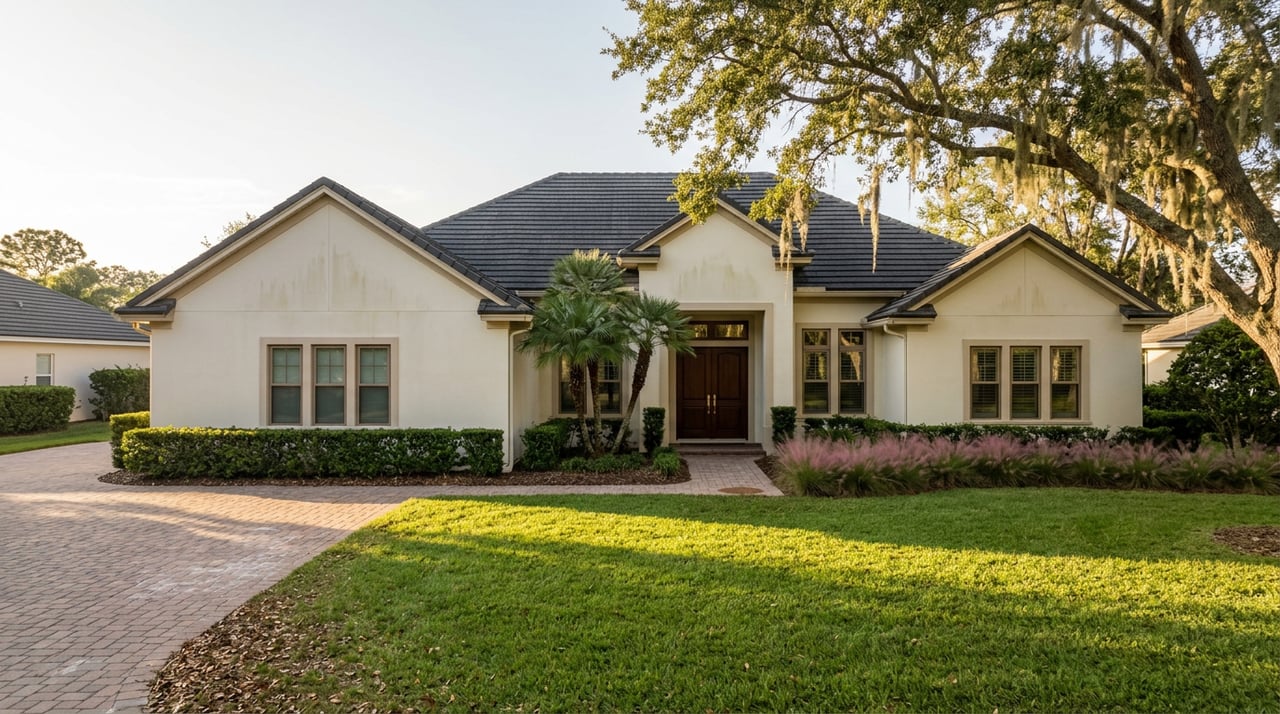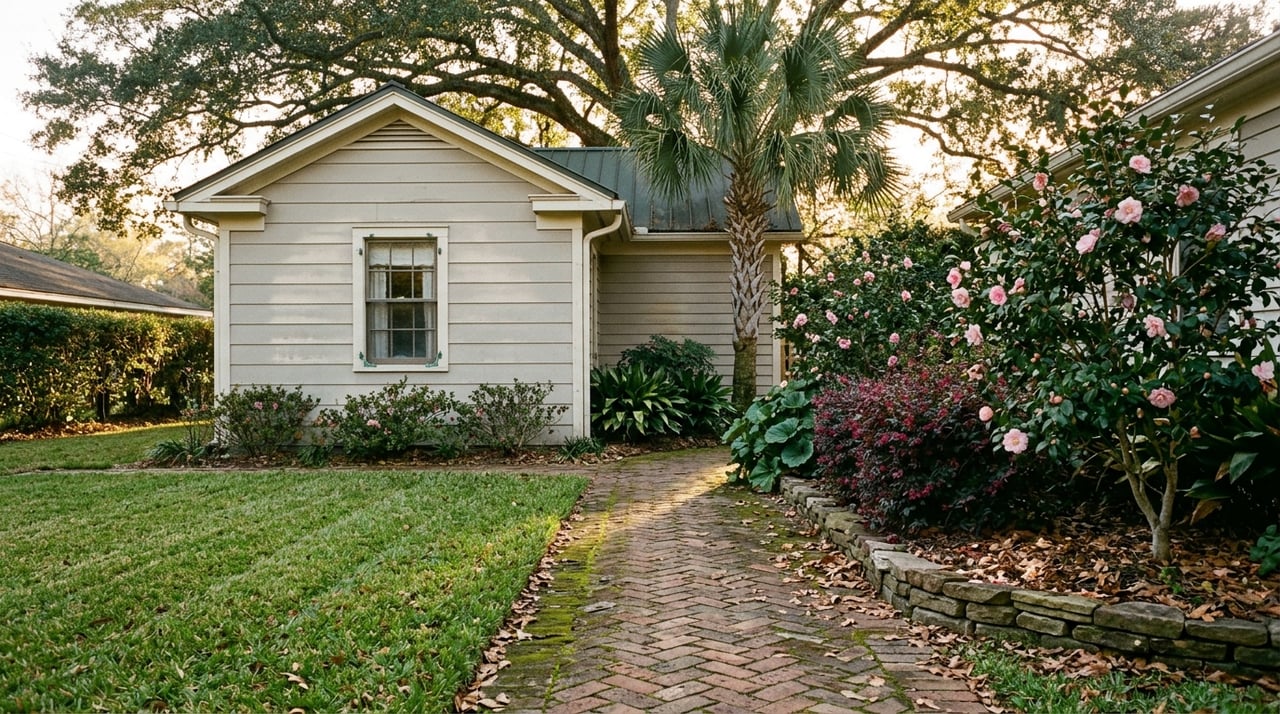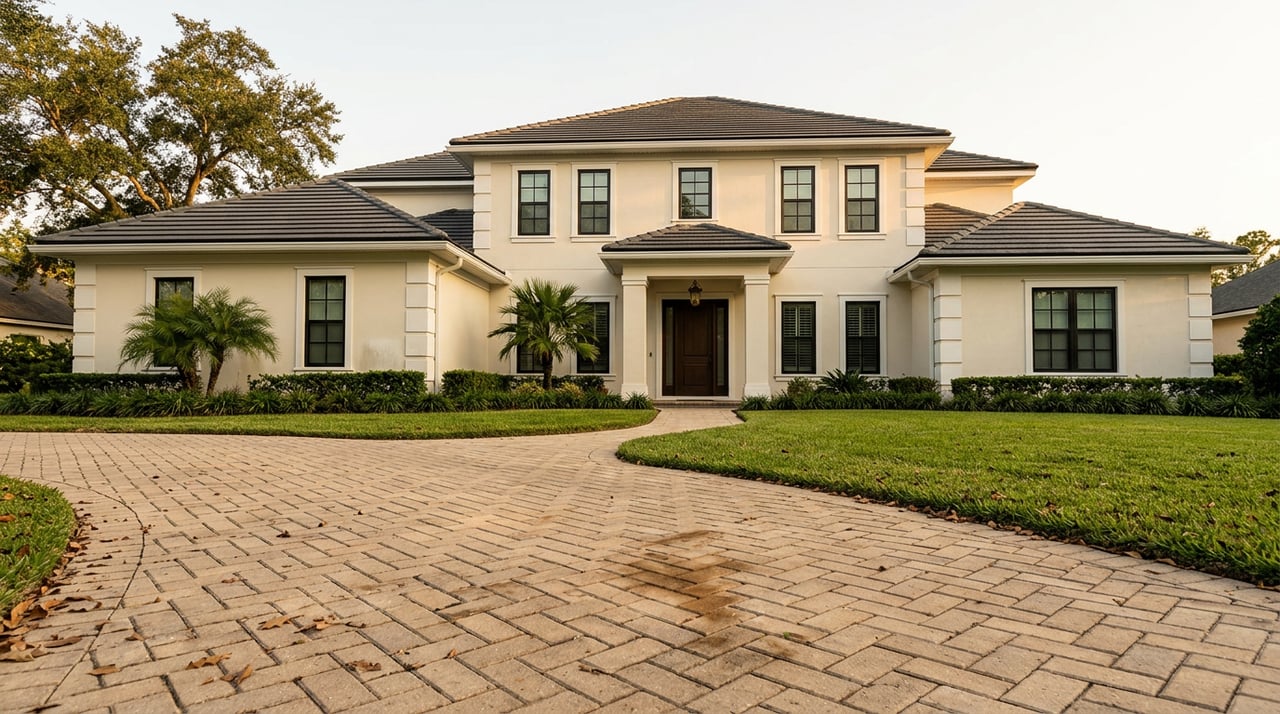
Pull up two listings in Polk County priced within a few thousand dollars of each other. One sits in an established neighborhood like Sandpiper or Colonnades in Lakeland, built out years ago, no special assessments on the tax bill. The other is a new build in a master-planned community with a clubhouse, a pool, and a homeowners association that looks almost identical to the first house's on paper.
They are not the same monthly payment. One of those homes carries a second, recurring bill that never shows up in the list price, and it behaves nothing like an HOA fee. If you're comparing Polk County neighborhoods this fall, that difference is the number that actually decides your budget, not the number on the sign.
The Bill That Never Makes the Listing Photo
The charge in question is a Community Development District assessment, and it's common enough in Polk County's newer subdivisions that most buyers have seen the initials without understanding what they're agreeing to. A CDD is a special-purpose local government, created under Florida law, with the authority to issue bonds and build the roads, stormwater systems, and amenity centers that come with a new subdivision. Someone has to pay off those bonds. That someone is you, on your annual tax bill, as a non-ad valorem assessment.
Bridgewater, a CDD-governed community in Lakeland, explains its own assessment on its official site in terms every homeowner in a similar district will recognize: one part is the bond debt taken out by the developer and divided among the lots, and the other is an annual Operations and Maintenance charge that pays for lawn care, lake upkeep, and management fees. The district describes its core job simply as managing the stormwater and the lakes. Bridgewater held its 2026 budget hearing on August 27 at its own Amenity Center on Villages Lakes Boulevard, the kind of meeting where residents find out whether next year's O&M line goes up.
That structure matters because the two halves move differently. The bond debt portion is fixed once it's set, tied to a repayment schedule that can run fifteen, twenty, even thirty years. It doesn't change unless the district refinances or issues new bonds. The O&M portion is set every year through the district's own budget process, which means it can rise even when nothing about your house has changed.
What "No CDD Fees" Is Really Advertising
Here's a detail that tells you how seriously buyers weigh this cost: established Lakeland communities without a CDD often lead with that fact as a selling point. Guides to Lakeland's 55+ communities point out that Sandpiper, a large North Lakeland community built out through the 1990s with a recently renovated golf course, carries no CDD fees, and the same is true of Colonnades in south Lakeland. That's not a footnote. It's a headline feature, right alongside the golf course and the pool, because the people marketing those homes know buyers are already doing the math on carrying costs before they ever call an agent.
If the absence of a CDD is worth advertising, its presence is worth pricing into your comparison. A typical Central Florida master-planned community's combined debt service and O&M assessment runs roughly $1,000 to $3,000 a year, which works out to somewhere between $83 and $250 a month once you fold it into your carrying costs alongside the mortgage, taxes, insurance, and any HOA dues layered on top.
| Cost component | Who sets it | How it behaves | Where you'll see it |
|---|---|---|---|
| CDD bond debt service | Fixed at bond issuance | Stable for the bond term unless refinanced | Non-ad valorem line, county tax bill |
| CDD O&M assessment | District's board, annually | Can rise or fall each budget cycle | Same tax bill line, adjusted yearly |
| HOA dues | Homeowners association | Set by the association's own budget | Separate monthly or annual invoice |
Some Polk County communities carry a CDD and an HOA at the same time, which means two separate bills funding two separate things. East Lakeland's Saddle Creek, a Lennar-built master plan off Old Mining Road, is a good local example of exactly that stack. Buyers there are weighing the CDD assessment, the HOA dues, and the lot itself as three distinct line items before they ever get to the mortgage payment.
The Other Invisible Number Moves on January 1
CDD assessments aren't the only cost baked into a Polk County new build that a resale home doesn't carry. Every new single-family home built in unincorporated Polk County also pays impact fees, one-time charges assessed at permitting that fund schools, roads, parks, and utility connections. Right now those fees total roughly $27,234 per home, with the Educational System Impact Fee alone running $11,124.
That schedule isn't static. Under the county's current phased structure, the Educational System fee rises to $12,187 on January 1, 2027. The Transportation Impact Fee for District A climbs from $3,710 to $4,103 the same day, and the Parks and Recreational Facilities fee goes from $1,381 to $1,864. Those increases are already adopted, not proposed, which means a builder pulling a permit in December is locking in a materially lower cost basis than one pulling a permit in January.
The City of Lakeland made its own move on this front in 2025, adopting new non-utility impact fee rates for transportation, fire, law enforcement, and parks that took effect January 1, 2026. Between the county's scheduled 2027 increase and the city's fees already in place, the cost of building a new home in and around Lakeland is on a step function, not a flat line. That's worth knowing if you're weighing whether to buy a new build now or wait for the next phase to release, because "the next phase" may simply cost more to build before it costs more to buy.
None of this is unique to a slow year. Polk County added close to 25,000 residents in the twelve months leading into 2026, one of the faster growth rates of any county in the country, and that pace is exactly why so much of the county's new supply comes wrapped in a CDD in the first place. Districts are the financing tool builders reach for when they need infrastructure in place before rooftops go up, and Polk County has had a lot of rooftops going up.
What to Ask Before You Compare Two Listings
If you're cross-shopping a new build against an established resale home anywhere in Polk County, the list price is the least useful number on the page. Before you fall in love with either one, get these answers:
- Pull the current tax bill for the specific parcel and look for a non-ad valorem or special assessment line. That's your CDD number, not the listing agent's estimate.
- Ask whether the assessment is billed on the tax bill or invoiced separately by the district or the HOA. Collection method affects how your lender treats it.
- Find out if the debt service is fixed for the life of the bond or scheduled to change, and ask when the district's fiscal year runs so you know when O&M gets reset.
- If you're comparing a new build to a resale, ask your builder or agent what permitting date locked in the home's impact fee schedule. A spec home permitted in 2026 and one permitted after January 1, 2027 are not carrying the same cost basis even at the same square footage.
- Add the CDD assessment, HOA dues, property taxes, and insurance estimate together before you compare monthly payments across two homes. The mortgage principal is only one piece of that number.
A Few Questions Worth Settling Early
Does a CDD assessment count against me when I apply for a mortgage? Lenders typically factor mandatory CDD and HOA payments into your debt-to-income calculation the same way they treat property taxes, so it's worth getting the exact annual figure before you get too far into underwriting.
Will the CDD assessment ever go away? The O&M portion continues as long as the district exists and maintains its assets. The debt service portion runs until the bonds are paid off, and some districts allow individual homeowners to prepay their share of the remaining balance, though the payoff process runs through the district's bond covenants rather than a simple calculation.
Are all new communities in Polk County CDD communities? No. Some builders develop without forming a district, and some established communities, like Sandpiper and Colonnades in Lakeland, were built and marketed specifically without one. The presence or absence of a CDD is a community-by-community fact, not a rule of thumb for new construction generally.
Comparing two Polk County neighborhoods on price alone will tell you which house costs less to buy. It won't tell you which one costs less to own. If you're weighing a move within Polk County and want someone to walk through what a specific community's CDD stack, impact fee timing, or carrying costs actually add up to, that's the conversation Brian Stephens has with buyers every week. Start by getting a clear read on what your current home is worth with a free instant home valuation, then let's talk through what the next one will really cost you to keep.